Your store is live, the catalogue is loaded, and you're still missing the product photos. How much does product photography cost for an online store is one of the last questions you ask before launch, and also one of the most underestimated: it's the line item that gets cut first when budget is tight, and the one that shows the most the moment a customer compares your listing to a competitor's. In this article we look at what drives the price, the ranges the market is charging today across Europe, the UK and Ireland, and the US and Canada, and what a shoot needs to include for the photos to do their job: sell.
What is product photography, and why does it matter so much for an online store?
Product photography is the set of images that show what you sell: front, side, close-up detail, in use. In a physical shop, the customer picks up the product, turns it over, tries it. Online, the photo is the only thing they have to decide whether to buy or keep looking.
That's why it weighs so heavily on conversion. Industry data suggests a high-resolution product photo can convert nearly twice as well as a low-quality one, and a professional image can lift conversion rates by 10 % to 33 % depending on the category (Rewarx, 2026). It's not just about the sale, either: when the photo doesn't match what arrives at home, the customer sends it back. Better imagery can cut return rates by up to 23 % (Let's Enhance), because the expectation the customer walks away with matches reality.
What drives the price of product photography?
There's no single rate because the work changes a lot depending on what you ask for. These are the factors that move the price the most:
- Number of products and angles. One photo per product is very different from four angles, a close-up and a scale shot. Every extra view is billed separately.
- Format. A simple white background, a packshot with careful lighting and shadow, a styled lifestyle shot, or an interactive 360°: each one needs a different setup and comes at a different price.
- Retouching. Cutting out the background, cleaning up imperfections, adjusting colour so it matches the real product: this is work separate from the shoot itself, and it's what makes the difference between a professional photo and an amateur one.
- Type of product. A small, matte product photographs quickly. Anything with glare, glass, metal or complex fabric needs more lighting time and more retouching.
- Model or hand shots. If the product is shown worn or in use, that adds the cost of a model (or hand model) and styling.
- Who does it. A low-cost volume service doesn't charge the same as a freelance photographer, and a freelancer doesn't charge the same as a studio or agency with its own retouching team.
What product photography costs, by region
The numbers vary a lot by country, so a single "global" price doesn't help anyone. Here's what's typically charged today, per photo:
| Level | Europe / EU | UK & Ireland | US / Canada |
|---|---|---|---|
| Basic (white background, one angle) | €3-15/photo | £10-25/photo | $25-50/photo |
| Professional (multiple angles, retouched) | €15-35/photo | £25-60/photo | $50-200/photo |
| Advanced (lifestyle, model or 360°) | €35-100/photo | £60-150+/photo | $100-500+/photo |
On top of that, if the product needs it, add the cost of renting props or a location for lifestyle shots, and shipping the product to the studio when the shoot doesn't happen at your own store or warehouse. Many providers also apply a minimum order: for two or three individual products, a fixed-price pack can work out cheaper than paying per photo, and most offer volume discounts past a certain number of SKUs.
What happens when product photography is bad
The cheapest photo isn't the one that costs the least to take: it's the one that gets the customer to buy and then return the item. A crooked background, a colour that doesn't match the real product, a single front-facing shot with no detail or scale reference: all of that creates doubts the customer resolves by leaving the listing, or by buying and returning it once what arrives isn't what they expected.
Idea: the real cost of a bad photo isn't what you saved on the shoot. It's the return, the shipping back, and the one-star review left by whoever received something different from what they saw on screen.
What a product photography shoot that sells needs to include
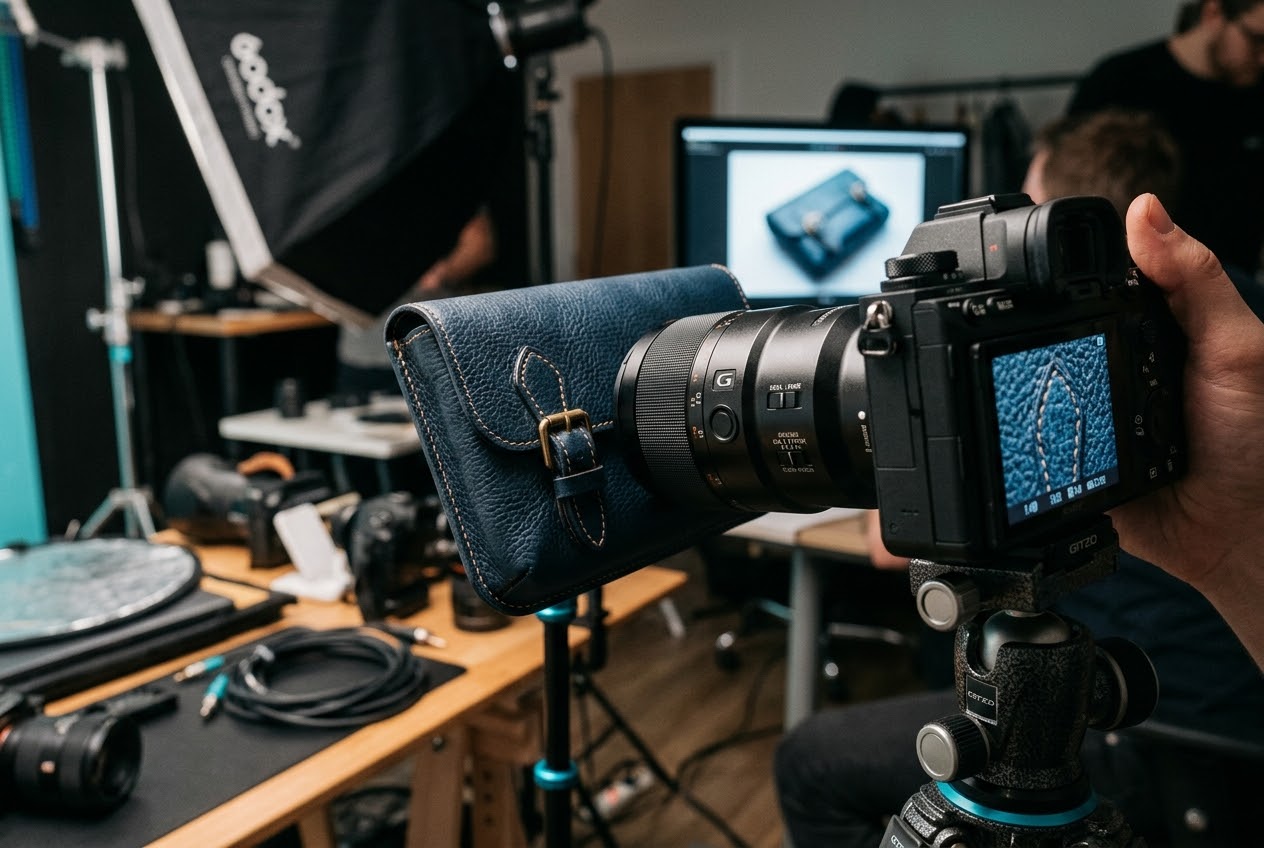
- At least three angles per product: front, side or back, plus a close-up of material or finish.
- A scale or in-use shot, so the real size is clear: it's one of the doubts that stalls an online purchase the most.
- A clean white background for the marketplace or catalogue, even if you use a lifestyle shot on the main listing: many channels (Amazon, comparison sites) require it.
- Colour that's true to the real product, checked on screen and not just through the camera viewfinder.
- A format and file size built for the web: an uncompressed multi-MB photo slows down the listing and hurts your Google ranking.
White background, packshot, lifestyle or 360°: which format to choose

Not every product in your catalogue needs the same treatment. It's common to mix formats depending on the product and the channel:
- White background: the base for any listing, and the format marketplaces require. Fast and cheap, but it doesn't sell on its own.
- Packshot with shadow or reflection: a step up that's still neutral, useful for catalogues where the product needs to look consistent across every listing.
- Lifestyle: the product in a real setting, with or without a model. It's what helps a customer picture themselves using it, and what gets shared most on social media.
- 360°: lets the customer spin the product on screen. It builds confidence for products where detail matters (fashion, jewellery, furniture), but it's the most expensive option and not every catalogue needs it.
Which product photography fits your business stage
- If you're starting out or validating a catalogue: a well-shot white background plus a scale photo per product is enough to launch. You don't need lifestyle or 360° yet: you need correct listings and to get out there selling.
- If you're already generating revenue with a wide catalogue: that's where it pays to invest in lifestyle shots for your best sellers, keep a consistent photo style across the whole store, and, if margin allows, add 360° for the categories where detail decides the sale.
How we do it at Cruslar
We don't send a per-photo rate without seeing the catalogue first. The number of products, the type of material and the channel they'll be published on all change how long the shoot and the retouching take, so we start by looking at what you have and what it's for. Our online store service includes advising on which photo format fits your catalogue, not just building the store and leaving you with half-finished listings. If you're still shaping the full catalogue, how to build an online store that sells covers where photography fits into the full process.
Frequently asked questions
Can I photograph the products myself with my phone?
To validate an idea on a zero budget, yes: with natural light, a clean background and a tripod you can get decent photos. Once the catalogue grows or you sell on marketplaces with strict image rules, the difference a professional shoot makes shows up in conversion.
Does the price include retouching?
Not always. Ask upfront: in many quotes the shoot and the retouching are priced separately, and retouching is exactly what turns an amateur photo into a professional one.
How many photos do I need per product?
At minimum, three angles plus a scale or in-use shot. If the product has a relevant texture or detail (stitching, an engraving, a finish), add a separate close-up.
Is 360° worth it for the whole catalogue?
Not for everything. Save it for the categories where detail decides the sale (fashion, jewellery, furniture) and where the product's margin supports the extra cost.
How long does a product photography shoot take?
It depends on volume and format: a small catalogue with a white background can be ready in a couple of days; a lifestyle shoot with a model and several settings usually takes one to two weeks, including retouching.
Launching a catalogue or ready to refresh your product listings?
Tell us about it and we'll help you decide which photo format fits your store, without charging you for what you don't need.
