Many people think "doing branding" means having a nice logo. The logo is just the tip. Brand identity is everything people perceive, feel and remember about your business, and it's what makes them recognise you and choose you again.
What a brand identity includes
Brand identity isn't a single piece: it's a system of elements that work together to set you apart from your competitors and make you recognisable. It groups into three blocks.
Visual elements
- Logo: the symbol or word that identifies you at a glance.
- Colors: the palette that conveys personality and drives instant recognition.
- Typography: the typefaces you use across text, headings and communications.
Verbal elements
- Purpose: your business's reason for being and its mission.
- Tone of voice: how you speak to your customers — warm, formal, playful.
- Values: the principles that guide what you do and what you don't.
Sensory and narrative elements
Brand identity is also built from what people hear and what gets told about you: a jingle, a tagline, a story that keeps getting repeated. A TV network like TNT got this right with a line that ran through its advertising for years: "the real world happens on TNT". It isn't a logo or a colour — it's a narrative that stuck to the brand's name, and that's identity too.
These three blocks then show up in everything your brand touches: your website, packaging, social media, how you treat customers.
Who actually builds a brand's identity?
This is where advertising as a discipline comes in: branding and creative teams are the ones who make sure all those pieces — the symbol, the colours, how the brand sounds when it writes — make sense together. It isn't about drawing a nice logo; it's deciding what that logo is going to represent for years, managing how it's applied across every version and every surface, and making sure the brand shows up the same way at every stage the business goes through.
Idea: a well-built brand identity is, more often than not, the biggest asset a company can end up owning — ahead of its equipment or its premises. McDonald's is a good example: much of its growth came from the strength of the brand, not just the burger. Today, opening a restaurant under that name — a franchise — means paying specifically for the right to use that brand. Recognition alone already generates revenue.
Why it matters: how you recognise a brand when you buy again
Think of something as simple as a bottle of water. If you liked the one you bought, how do you recognise it next time on the shelf? By its identity: the label, the colour, the shape, the name. Without that, you'd have to try again blind, and the next one might not be the same.
Idea: a consistent brand identity is what turns a good first purchase into a repeat one. When that identity doesn't exist or is inconsistent, every purchase goes back to being a gamble.
A consistent brand builds trust: when everything looks and sounds equally polished, you convey professionalism. And it makes you memorable, which is what makes people choose you over the next option.
Why more brands are betting on being simple and recognisable
It's still easy to find businesses with generic names — the kind that read like "Smith & Associates" or "Lucky House" — that may have worked at some point, but today say nothing about what they offer and don't set them apart from the competition.
The trend runs the other way: shorter names, simpler symbols, brands you identify at a glance. Nike and Adidas are the clearest example — their symbol is recognised without reading a single letter. BMW does something similar from a different angle, keeping a logo with decades of history that's distinctive enough that it doesn't need changing.
This isn't just aesthetics. As the generations who buy keep changing, brands need to feel fresh without losing what already makes them recognisable — and that balance is, again, brand identity work, not just design.
What happens when identity breaks: the Coca-Cola case
In 1985, Coca-Cola changed its drink's formula and launched "New Coke". The product itself wasn't the real problem: the problem was touching something that, for millions of people, was part of the brand's identity, without warning or explaining why. The backlash was so strong that the company brought back the original formula in under three months, under the name Coca-Cola Classic.
The case is still studied today because it makes one thing clear: a brand's identity isn't just the logo, it's also the experience people associate with it. When that association breaks without being managed well, it breaks trust that took years to build.
When identity evolves without getting lost: Apple, Kia and LATAM
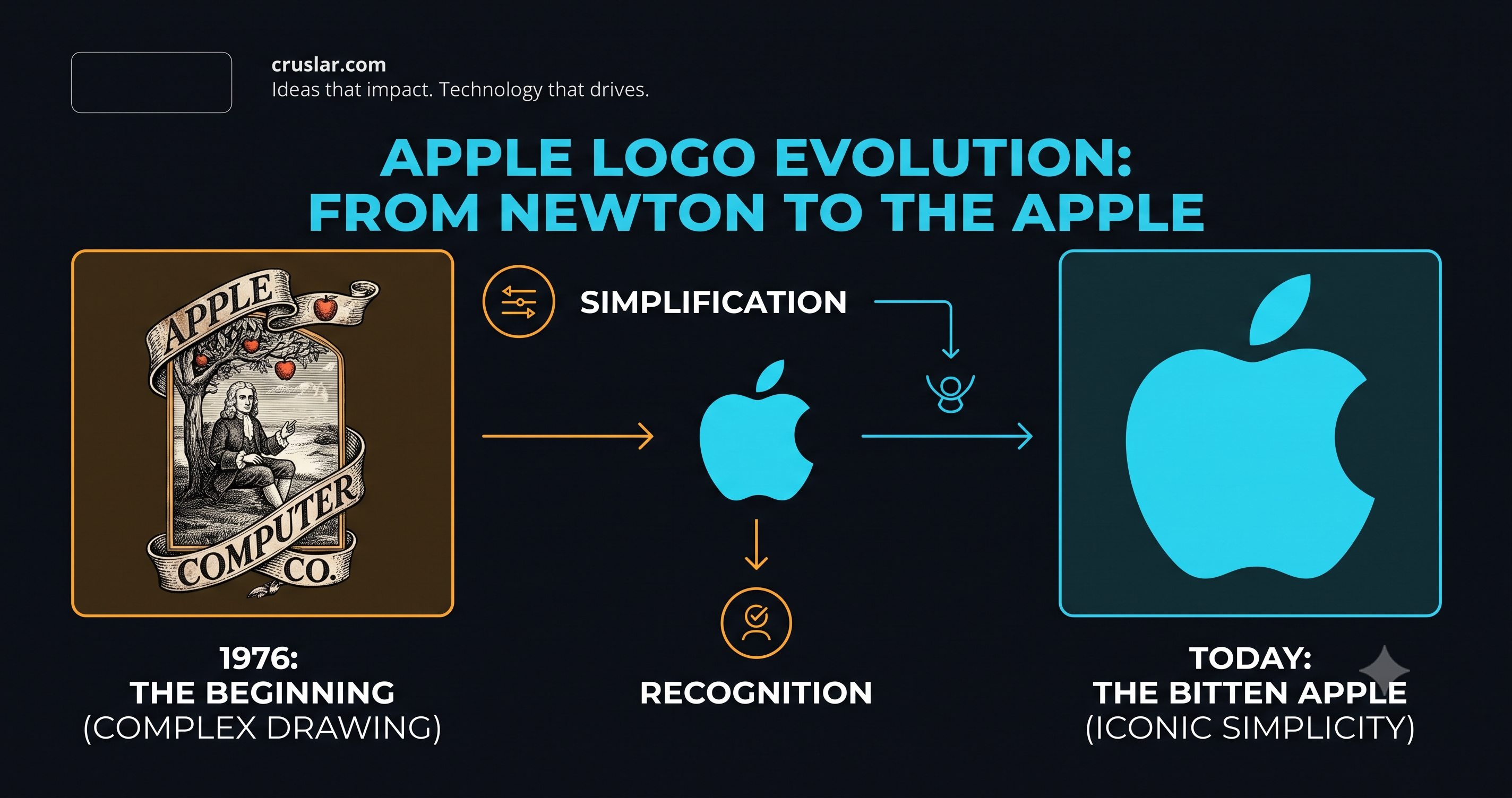
Changing a brand identity isn't always a mistake, if it's done well. Apple's 1976 logo — Isaac Newton under a tree, in a very ornate design — looks nothing like today's bitten apple. But every redesign since was a progressive simplification, never a change of direction: the brand kept paring down to the essentials until it reached a symbol recognisable without any text at all.
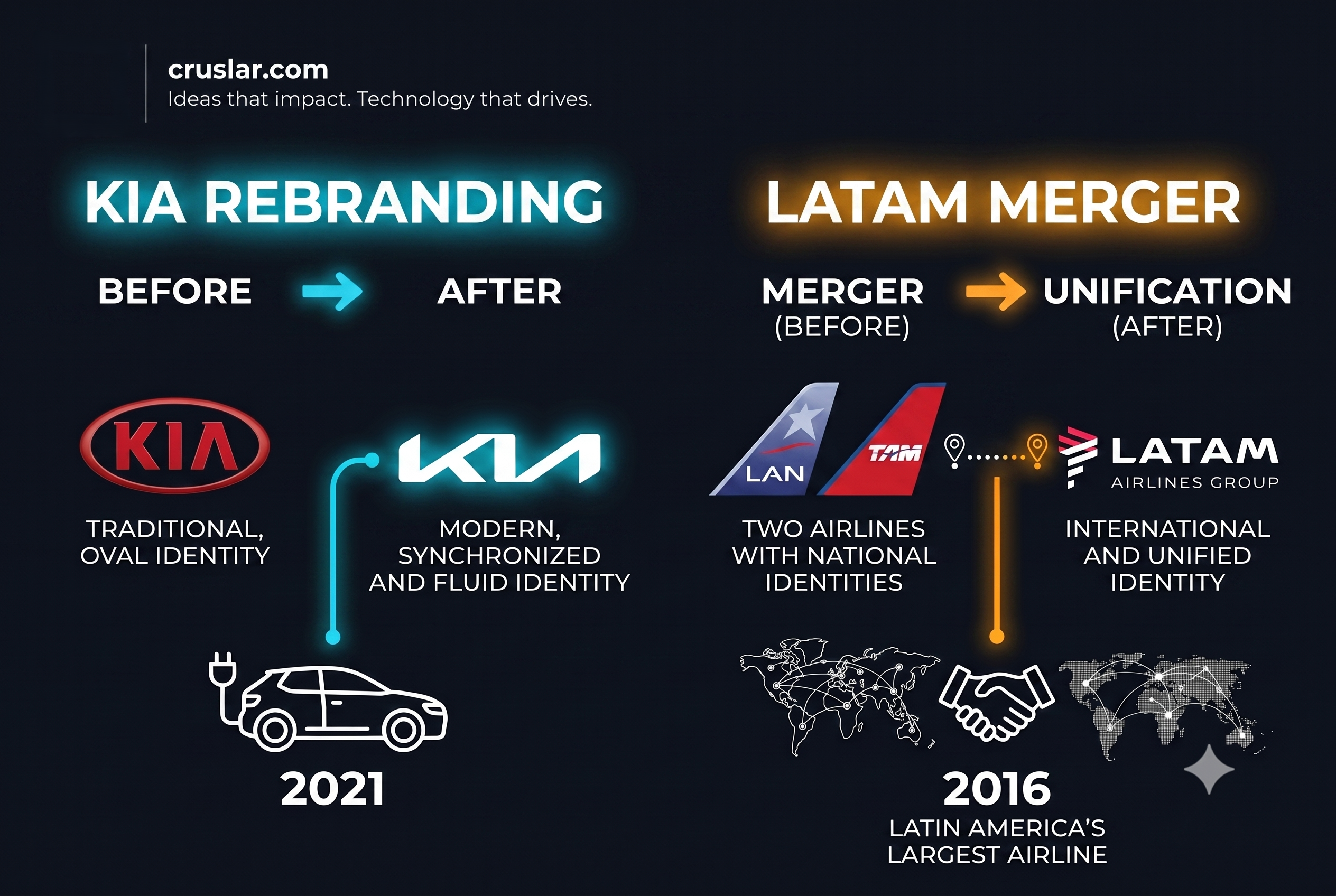
Kia did something similar in 2021: it changed its logo and much of its visual identity as part of a positioning shift, from a generalist manufacturer to a brand centred on mobility and design. The change worked because it came with a clear business reason behind it, not just an aesthetic whim.
In Latin America, the merger of LAN (Chile) and TAM (Brazil) in 2016 produced LATAM Airlines, with a new identity built to represent both airlines as a single regional brand. It was a case where identity had to solve something very concrete: two airlines with their own history that had to become one brand without either feeling "absorbed" by the other.
What we see at Cruslar
In branding we don't just deliver a logo, but a complete, ready-to-use system. A great example is the Pollos Don Leo brand, where we balanced tradition and modernity so the brand would be recognised instantly without losing what made it feel close to people.
The prestige brands like Apple or Rolex carry doesn't appear overnight. It's built over years of positioning work: studying who you're speaking to, how you want to connect with that audience, and what gap the competition is leaving uncovered. That last point matters most if you're just starting out: looking at what the businesses already selling what you sell aren't doing well is usually faster and cheaper than trying to outdo them at everything from day one.
What your brand needs depending on your business stage
- If you're starting out or still validating: you need the essentials done well — logo, colours, typography — to convey seriousness from the first contact, without investing in a full system that might change once the business finds its final shape.
- If you're already generating revenue and have a customer base: that's where a complete, documented brand system pays off, with clear rules so that anyone working with you — from a new designer to whoever runs your social media — keeps the same identity without having to ask you every time.
Frequently asked questions
Are brand identity and branding the same thing?
They're closely related. Branding is the process of building and managing the brand; brand identity is the result: the set of visual, verbal and positioning elements that represent it.
When should I change my brand identity?
When it no longer represents what your business is today, or when it confuses people seeing you for the first time. It shouldn't change out of fashion or fatigue: the cases that work, like Kia's, always have a business reason behind them.
Is a generic logo still a brand identity?
It's a very weak one. If nothing sets you apart from a similar brand, someone who bought from you once will struggle to recognise you and choose you again on purpose — which is exactly the opposite of what a brand identity is for.
How long does it take to build a brand identity?
The visual system and positioning can be defined in weeks. Getting people to recognise it and trust it takes longer: that's built one consistent application at a time.
Why do so many brands use simpler and simpler logos?
Because a simple symbol is recognised faster and remembered better. Once a brand has spent years building that association — like Nike or Adidas — it can afford to drop the text, because the symbol already does all the work. Getting there takes time, but it's the direction almost any well-built identity is heading.
Does your brand convey who you are?
Tell us and let's review it together.
